Three crops, not one season
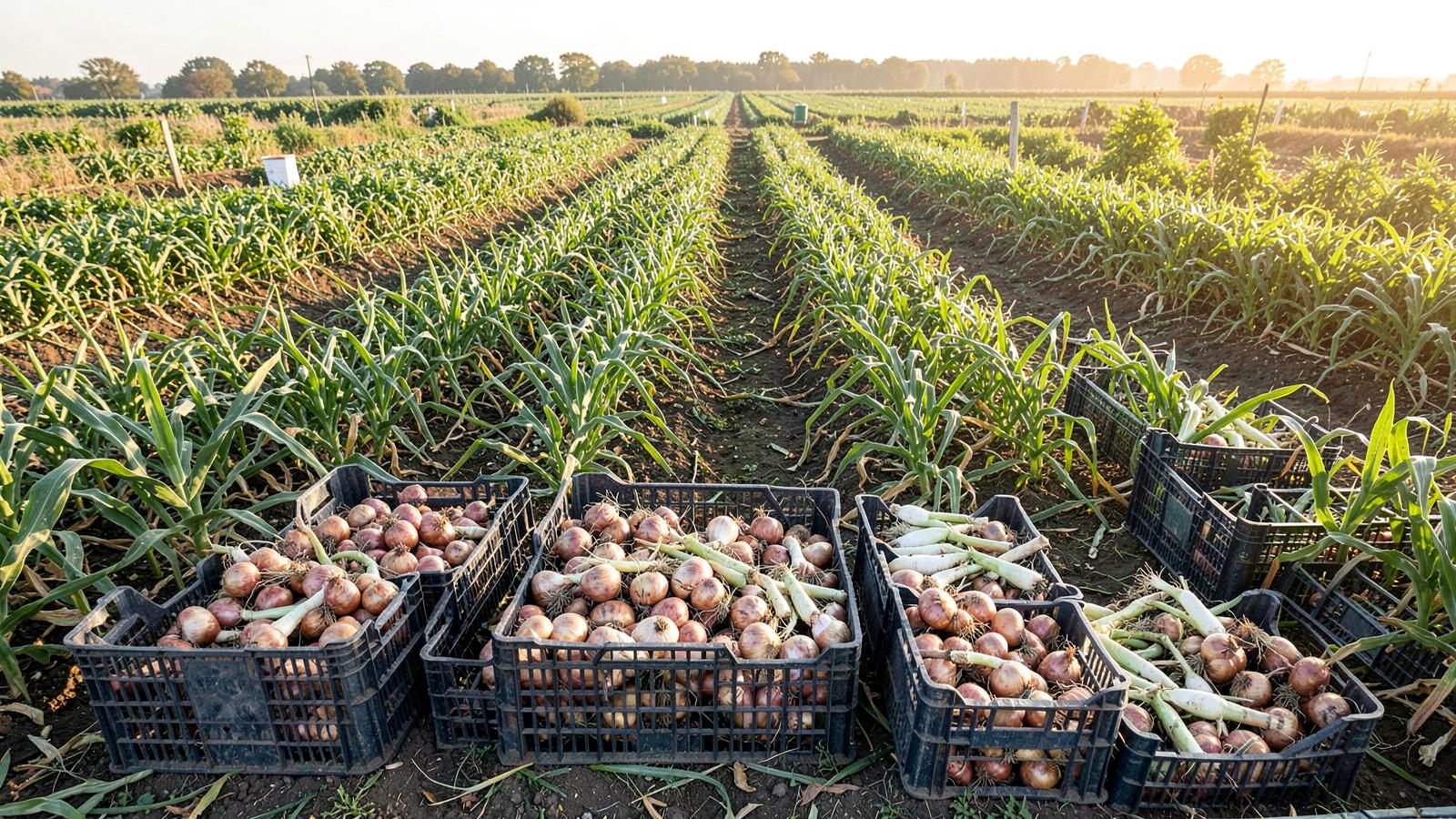
India ships onion from three distinct crops. The kharif crop arrives from late October, carries high moisture and does not store well, so it has to move quickly. The late kharif follows from January and holds better. The rabi crop, lifted from March and April, is the storage crop that carries the market through the monsoon months.
A buyer planning a quarter of supply needs to know which crop is loading. The same specification behaves very differently in a forty-day transit depending on whether it came off a kharif or a rabi lift.
What actually moves the price
Daily arrivals at the benchmark markets set the tone, but the number worth watching is stored rabi stock. When stock runs thin ahead of the kharif arrivals, prices rise sharply in September and October regardless of the wider crop outlook.
Export policy is the second variable. Minimum export prices, duties and outright bans have all been used in recent years, sometimes at short notice. A contract without a clause covering a policy change puts that risk entirely on one party.
How we plan against it
We quote against a named crop window rather than a calendar month, agree grade and tolerance in writing before loading, and keep an alternative origin identified for any programme running through a policy-sensitive window.
For buyers taking regular volume, splitting a quarter across two loading windows usually costs less than chasing the market on a single large order.
Planning a programme on this line?
Send us the product, specification and destination and our trade desk will come back with origin options and pricing.